
Transforming Child Care

Transforming Child Care:
The Power of Systemic Change
The world of childcare has never been more critical and complex than it is today. It’s an essential service that millions of lives rely on, daily, from parents and caregivers to the little ones who depend on it for their early development, and employers who rely on a reliable workforce. Amidst all of the challenges our communities are facing, locally, nationally and even internationally, its easy to put this essential service on the back burner forgetting that nothing else gets the attention it needs when our professionals, our teachers, our doctors, our pilots, service sector employees and more are distracted with child care needs. It’s the cornerstone of a prosperous society. In this blog post, we’ll explore the profound impact of systemic change in child care and how it can shape a brighter future for us all.
The Current Child Care Landscape:
Before diving into the transformational journey, let’s first understand the lay of the land. Child care in the United States is at a crossroads. Families need child care to work, to support their child’s development, and to ensure their own financial stability. However, the existing childcare system is riddled with challenges, such as limited access, affordability issues, and real and percieved disparities in quality.
The Role of FFN Providers:
One significant facet of child care is Family, Friend, and Neighbor (FFN) care. These caregivers, often unsung heroes, play a critical role in supporting families, especially in communities with limited access to licensed care options. Their services are invaluable, providing trust, cultural relevance, and flexibility that many families require. These providers often fill the gap that exists in licensed care when families work non-traditional hours, or over the weekends.
Care in all settings it occurs must be resourced and supported. Child care is a system that the public relies on, and there for must become a public good. While we have been working diligently in supporting and uplifting a childcare sytem that meets the needs of our diverse and vibrant communities, we have a long way to go. Below we will highlight some of the successes we have achieved and share some of the areas where we still need improvements.
Systemic change is a multi-pronged approach to changing a system that works for some while leaving others behind. We must approach change as policymakers, government agencies, and community-based organizations through education, organizing, and policy led by those directly impacted, the FFN providers. We have demonstrated through the last 20 years that FFN providers want the absolute best for the children in their care.
We have been able to demonstrate as an organization by having trained over 3,500 FFN providers through our evidence-based FFN training program. By educating FFN providers on how to be high-quality child care providers that can provide both a safe and nurturing environment, children are better prepared to enter kindergarten. Through this work, we recognize that there is a desire among FFN providers to be connected to each other. Serving as an FFN provider can be an isolating profession. The Colorado Statewide Parent Coalition created an online networking space for FFN providers who complete the PASO program to stay connected, receive, and share resources. But this is not enough. There are thousands of FFN providers out there who are not connected. Thanks to the vision of FFN providers and organizations that serve FFN providers, we are launching the first FFN Hub to serve as a space for all FFN providers. This hub, generously sponsored by the City and County of Denver, will serve as a pilot that will hopefully prove successful and encourage other counties across the state to invest in.
Colorado’s policymakers have been hard at work passing policy in Colorado to strengthen our child care sector. These policies have streamlined zoning regulations for licensed childcare homes across the state, provided emergency sustainability dollars to licensed facilities, and have even created an entire state department to serve the childcare ecosystem. Policy in relation to FFN care has been to regulate the number of children in the care of providers from what used to only be 2 children to four children, and to require FFN providers to inform families that they are not licensed. While we firmly believe in transparency, we also believe that this further stigmatizes FFN providers. As we have already covered, FFN providers care for more than 60% of the children in Colorado and make up over 50% of providers in Colorado.

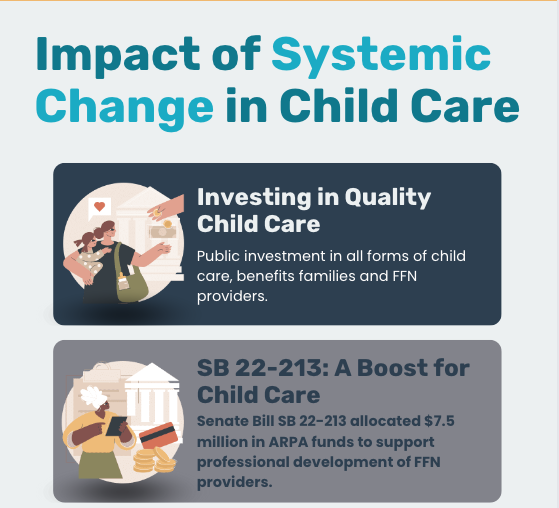
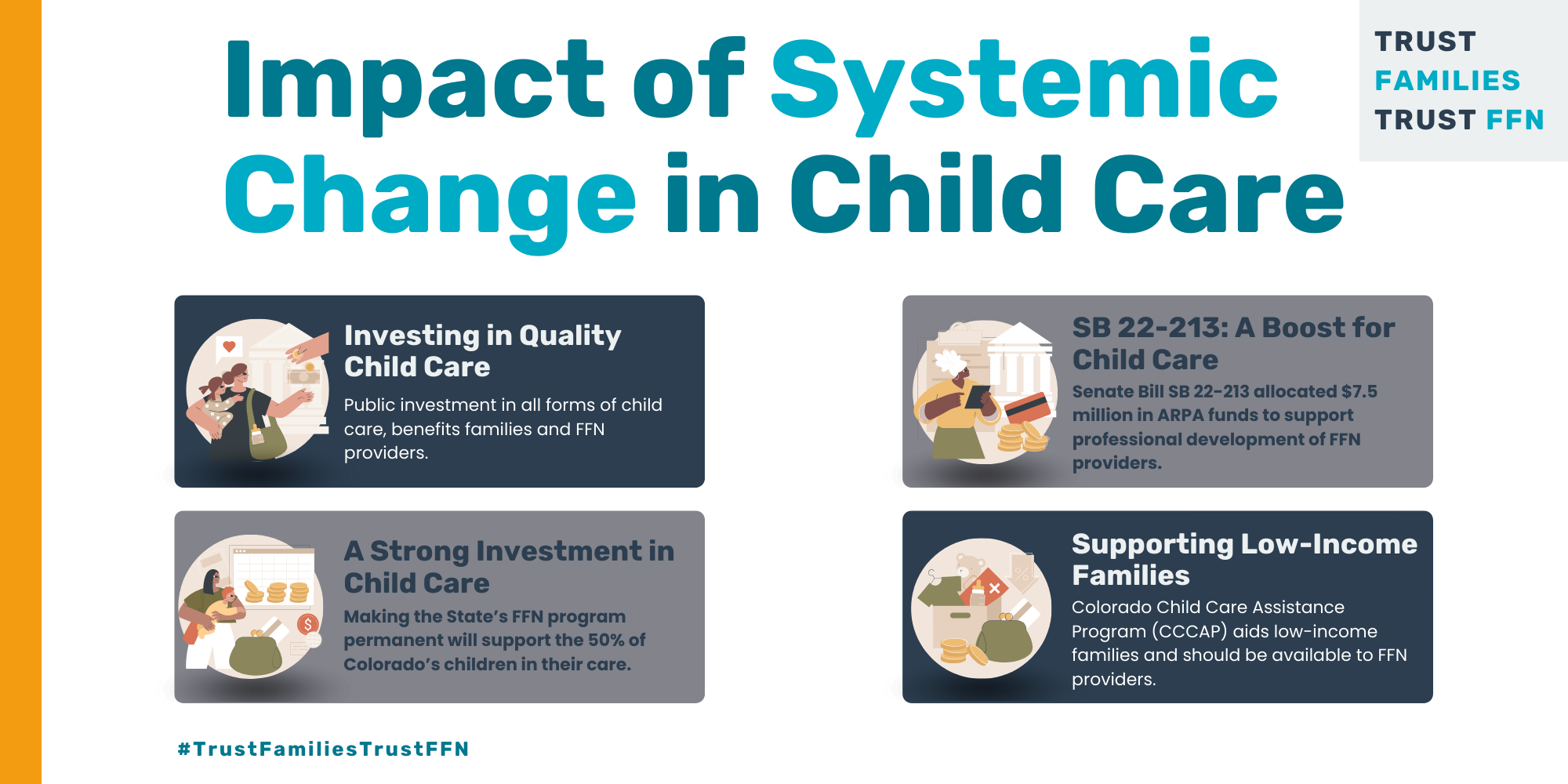
In 2022, thanks to American Rescue Plan Act (ARPA) dollars, Colorado for the first time ever chose to invest in the professional development of FFN providers instead of the continued stigmatization. Colorado policymakers voted on a $100 million investment in early childhood in SB22-213 and of that, $7.5 million was dedicated to supporting FFN care. This included the creation of an FFN coordinator at the state level, the creation of an advisory council, and grant dollars to FFN training organizations to support providers in their professional development and in materials and early learning supports. This is a huge milestone in the acceptance of Colorado’s true mixed delivery system, which is largely FFN care. Unfortunately, this FFN program, embedded in the new Colorado Department of Early Childhood, is only temporary as it was set up as a grant program funded through the ARPA dollars that expire in 2026. It is imperative that the state makes this program permanent as we know that not only will the need for FFN care continue, but it will also increase with the federal child care cliff.
When policymakers are deciding on investments in the child care sector, they must include investments in FFN care as well to ensure that the 60% of children who are in the care of these motivated, loving providers are receiving high-quality care as well.